2019
Re-Store
How can a piece of software help assess the benefits of sustainable waste management? My team created a UI prototype that guides municipalities and SMEs through evaluating the social, economical and ecological impact of different waste treatment methods.
My role
- UI/UX
Overview
Assessing sustainable waste management
For this 1-month project, my team of 4 went deep into the waste bin. How does municipalities make decisions regarding waste treatment methods? And how do enterprises and initiatives that develop new waste treatment methods work?
Our project resulted in a UI prototype for a software that can successfully guide the municipality and SMEs (Small and Medium Enterprises) through the process of evaluating the social, economical and ecological impact of using different waste treatment methods.
Background
An untapped potential
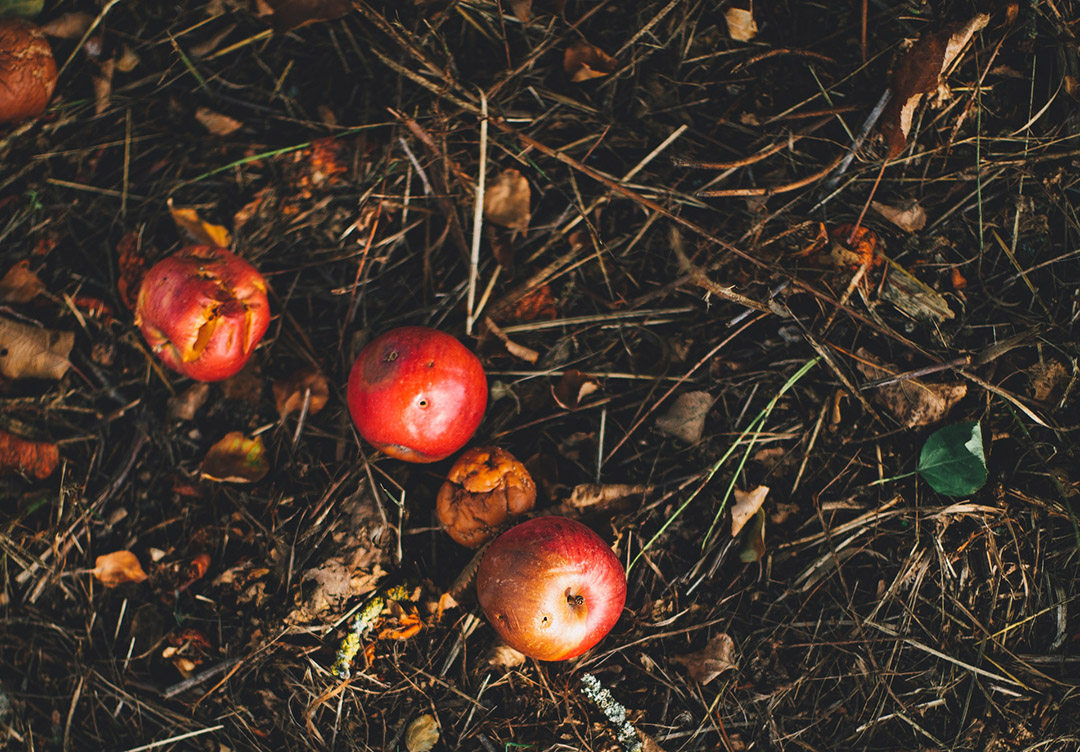
In Amsterdam, just like most greater municipalities, a large amount of organic waste, such as food residue, is mixed with other rubbish such as plastic packaging and metal. This is an untapped potential since the waste could produce biogas that can provide a local source of heat and energy.
Amsterdam municipality is interested in finding a solution to the problem: what do we do with organic waste? Is there a treatment method that is both ecologically sustainable and cost efficient? Or could it even provide more jobs?
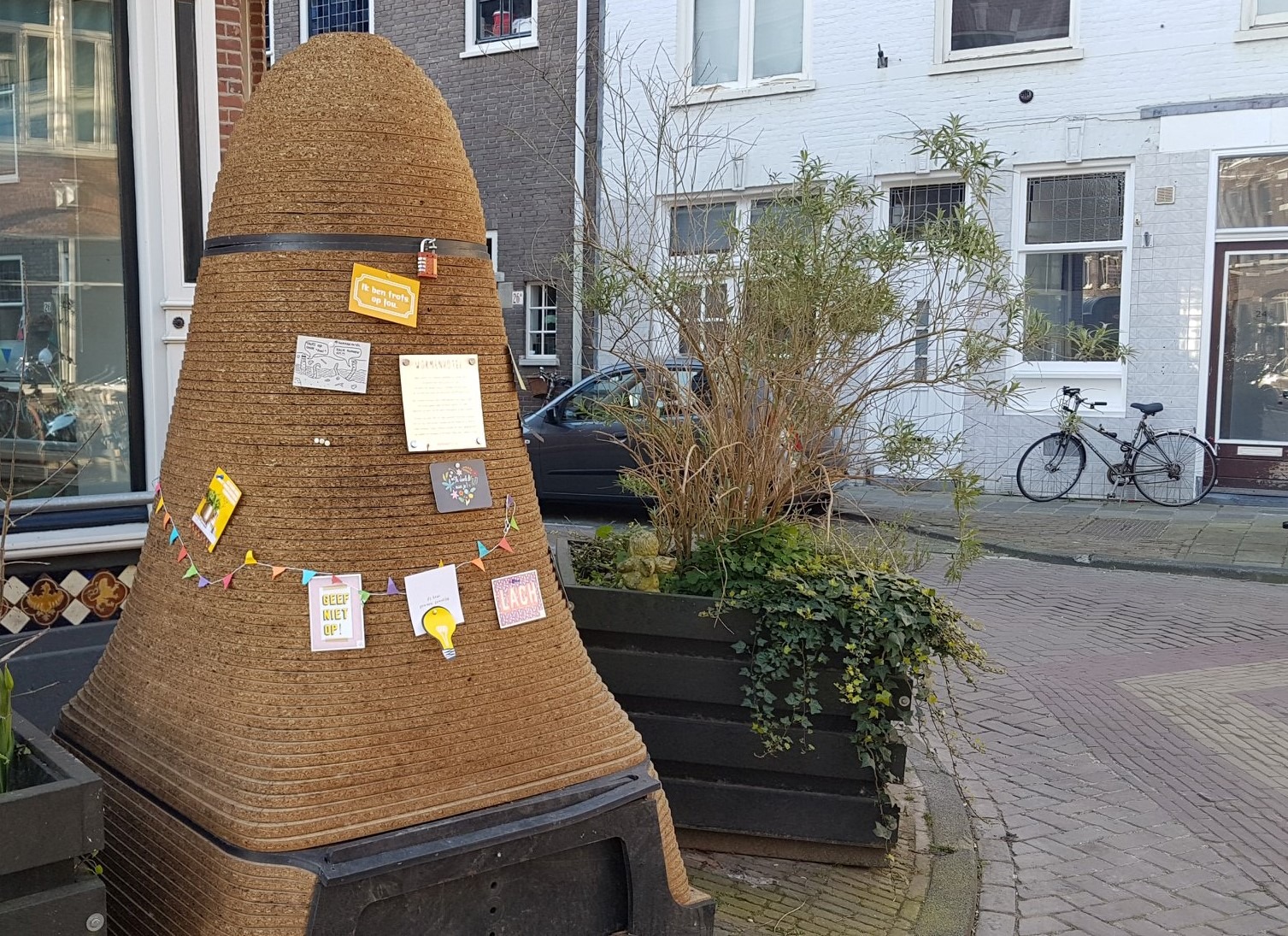
There are a few methods for treating organic waste (such as the Wormenhotel pictured above) that is being tried out by the municipality. It is a man-size bin for organic waste, inhabited by worms that produce soil out of the waste. It is considered a smart, modern and aesthetically pleasing solution, but the municipality has no way to assess its efficiency ratio, and therefore does not know if it pays off to invest in it on a larger scale.
My team of 4 teamed up with Re-store, a research group at the HvA in Amsterdam, that is developing a tool and simulation model for assessing the benefits (ecological, economical and social) of different waste treatment methods.
The Challenge
Making the model understandable
The briefing received from our clients, Urban Technology, could be boiled down to one main challenge:
"How can the Re-store model become more understandable, so that the municipality and SMEs can make more informed decisions on waste treatment methods?"
Currently, the Re-store model is a spreadsheet. To be able to make it usable for municipalities and SMEs, we needed to come up with a more accessible interface.
Having access to the Re-store model, enterprises would gain insight about their own impact and competition from other enterprises. The municipalities could make informed decisions on what methods to focus on.
Research
Understanding the stakeholders
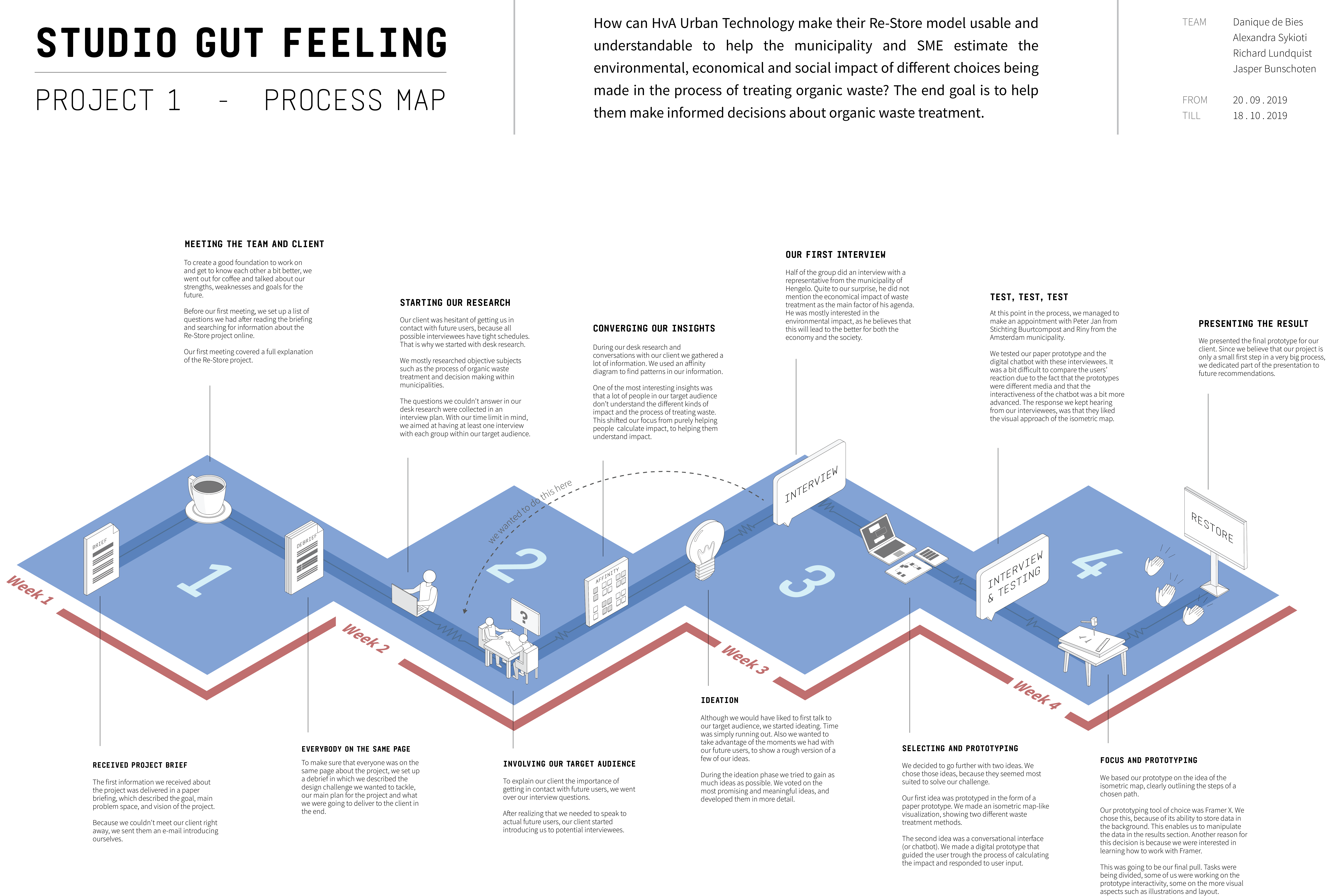
Our initial step was to conduct desk research — getting a primer on waste treatment and the steps involved, but also how the municipality and waste treatment SMEs work.
We got in touch with municipality representatives from Amsterdam and Hengelo as well as the representative of one waste treatment initiative called Wormenhotel (Worm Hotel).
Based on the insights, we were able to create personas to identify and better understand our target audience.
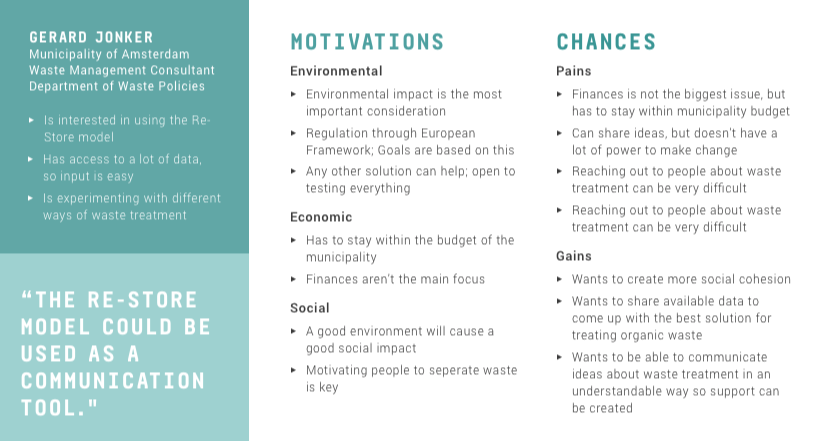
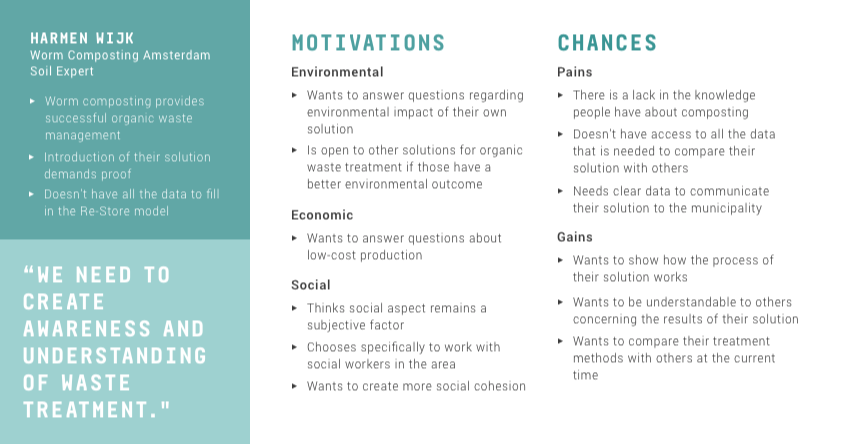
Research proved that ecological sustainability is the most important factor. The output of the Re-store model is numbers. How can we make those numbers tangible?
Ideation
Exploring data input and visualization
Early ideation sessions were focused on how to visualize the waste gathering–delivery–treatment process, but also how the user would input data. And at last, how would the results be visualized in a tangible way? We started out with quick timed iterations of paper sketches.
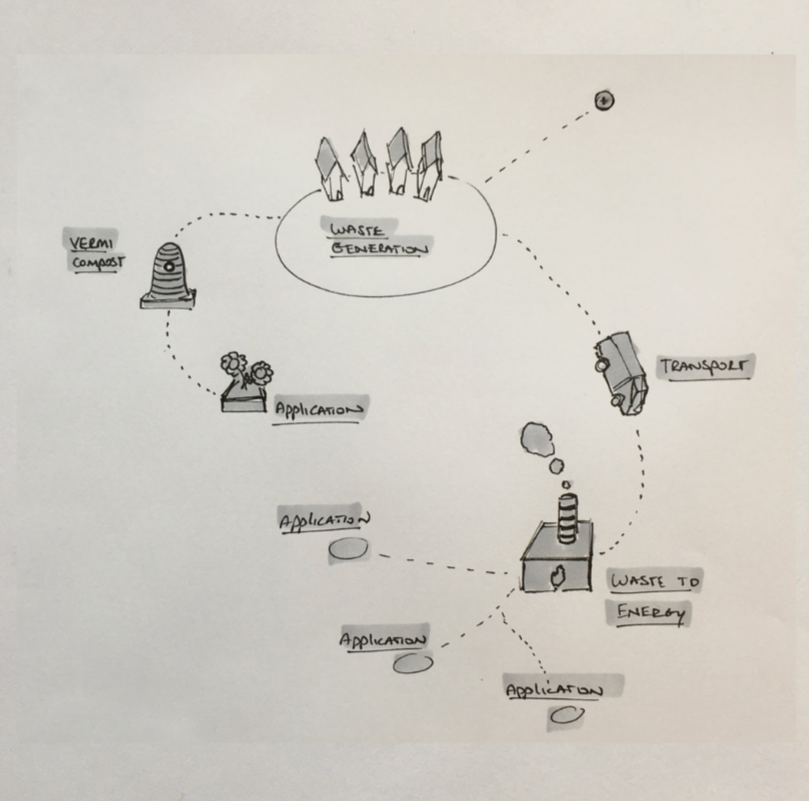
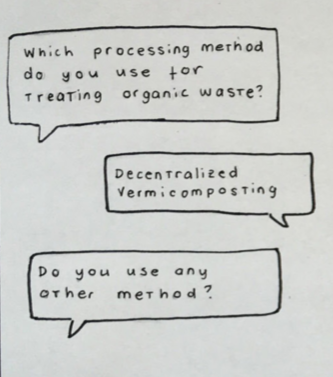
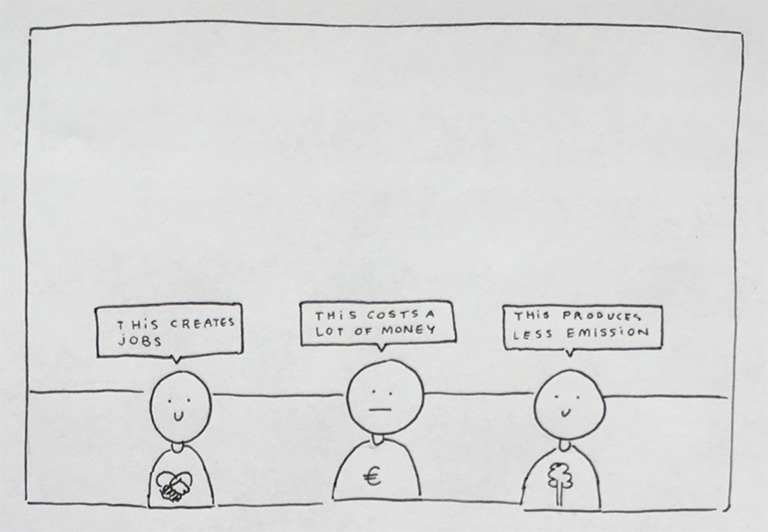
The chatbot idea would prove too tedious to use for inputting data. What would be the most useful would be to have a map-like overview.
Prototyping
Testing with the target audience
Still at a paper sketch-level, we had a prototype that could be tested with our target audience.
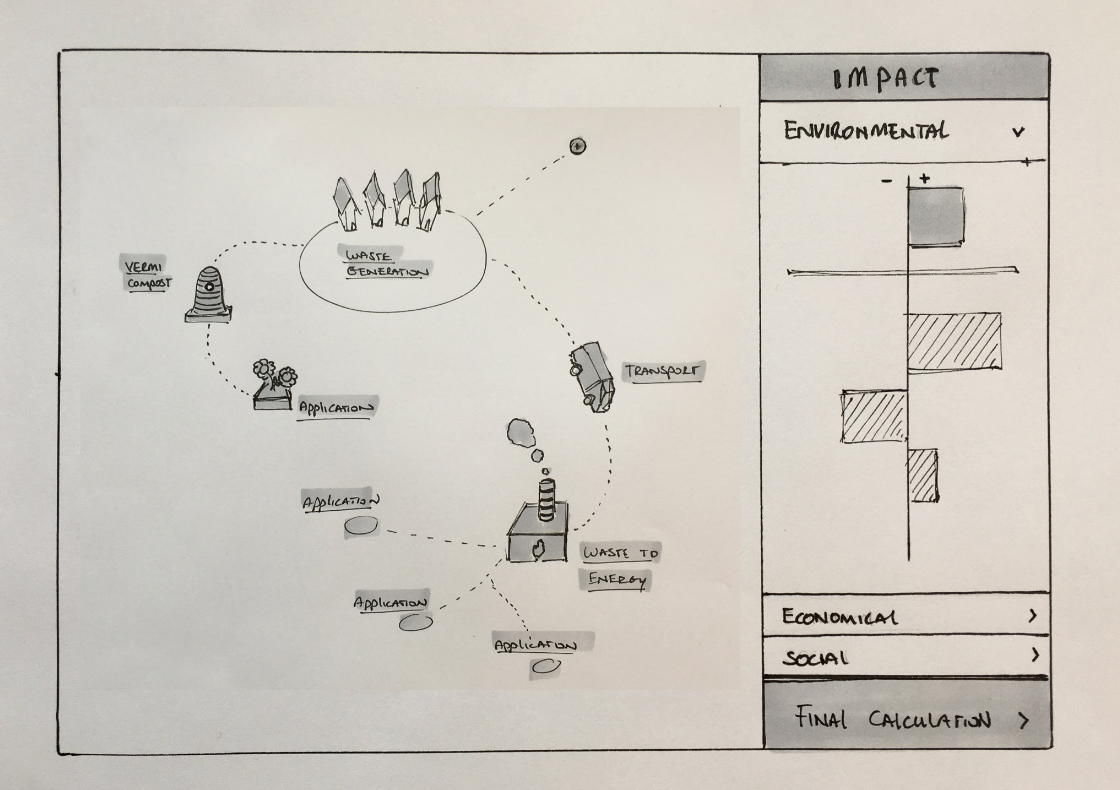
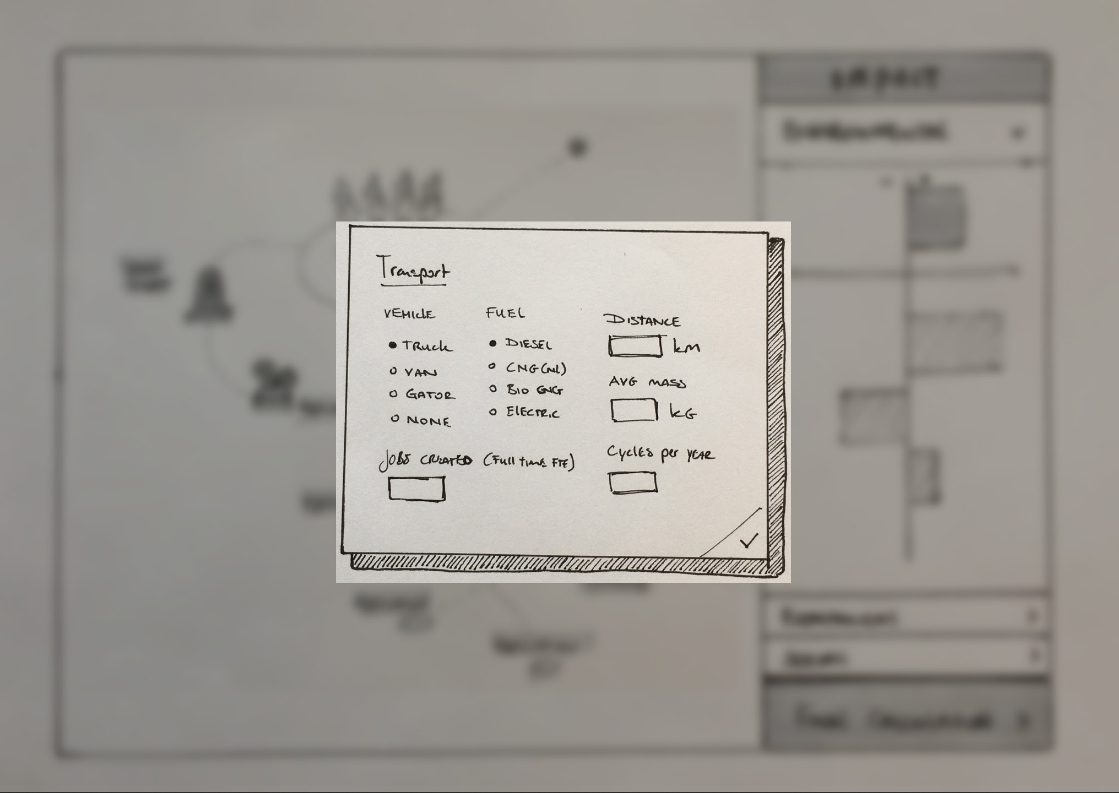
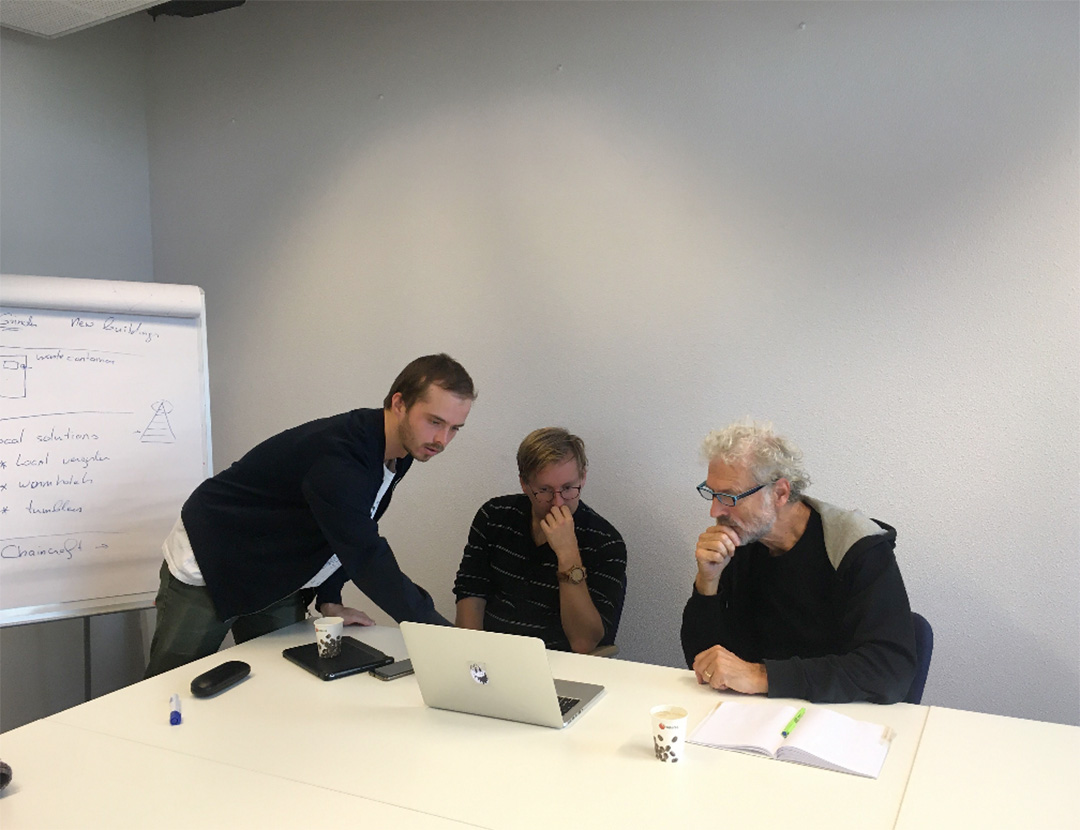
Our prototype was appreciated. Our only challenge would be to focus more on visualizing the output data. Furthermore, we should be able to compare two methods in our prototype.
The Solution
A tool for informed decisions
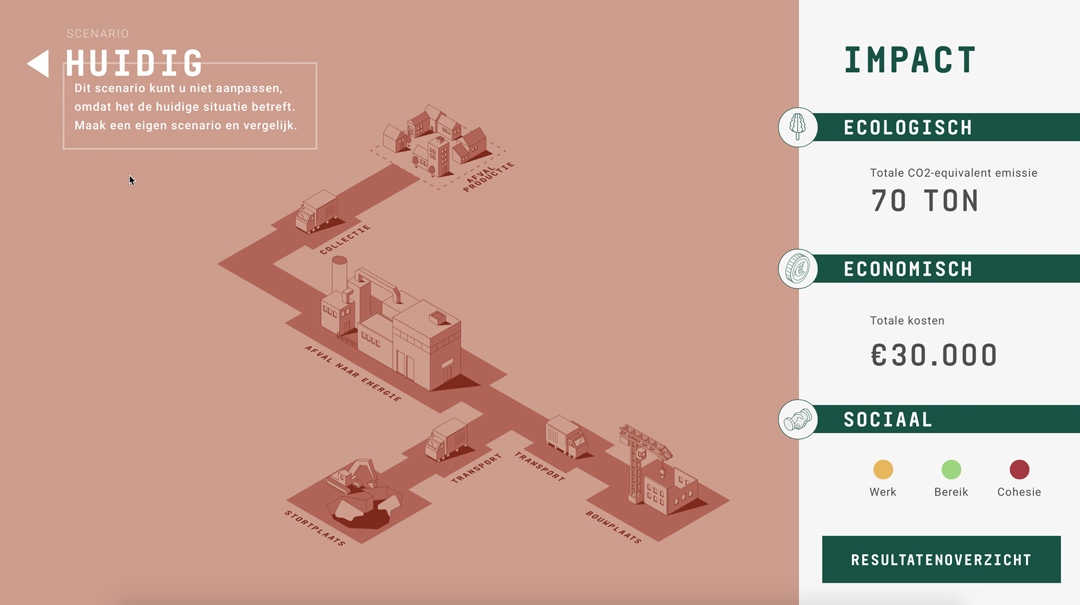
The user can at first get an overview of the steps required in the waste treatment process.
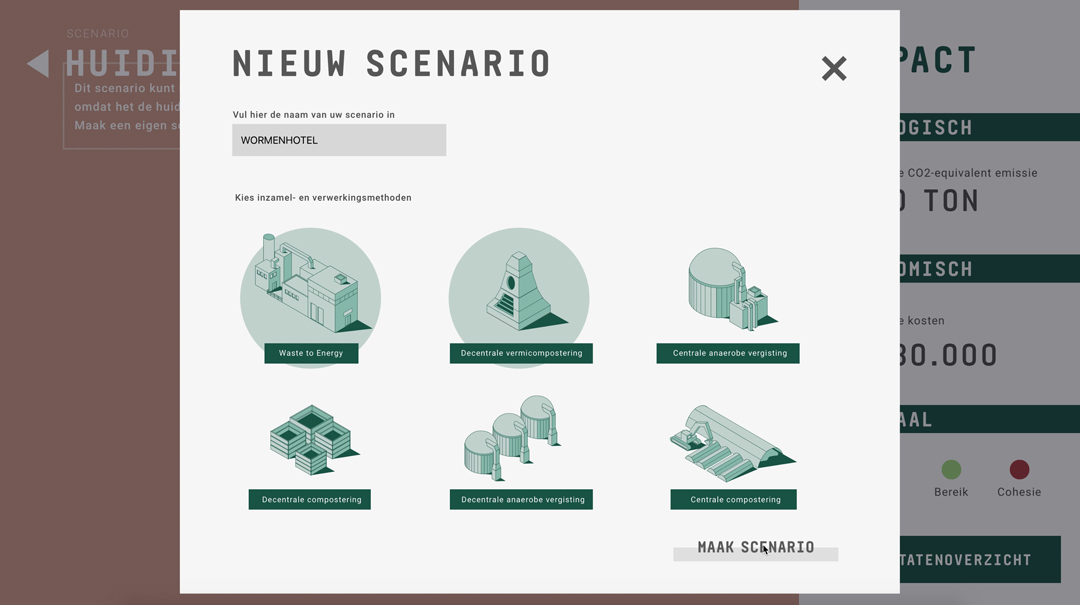
Then the user makes a new scenario to compare with the current one ("huidig"), featuring waste treatment types of choice. The user can pick methods such as decentralized/centralized composting, biogas production etc.
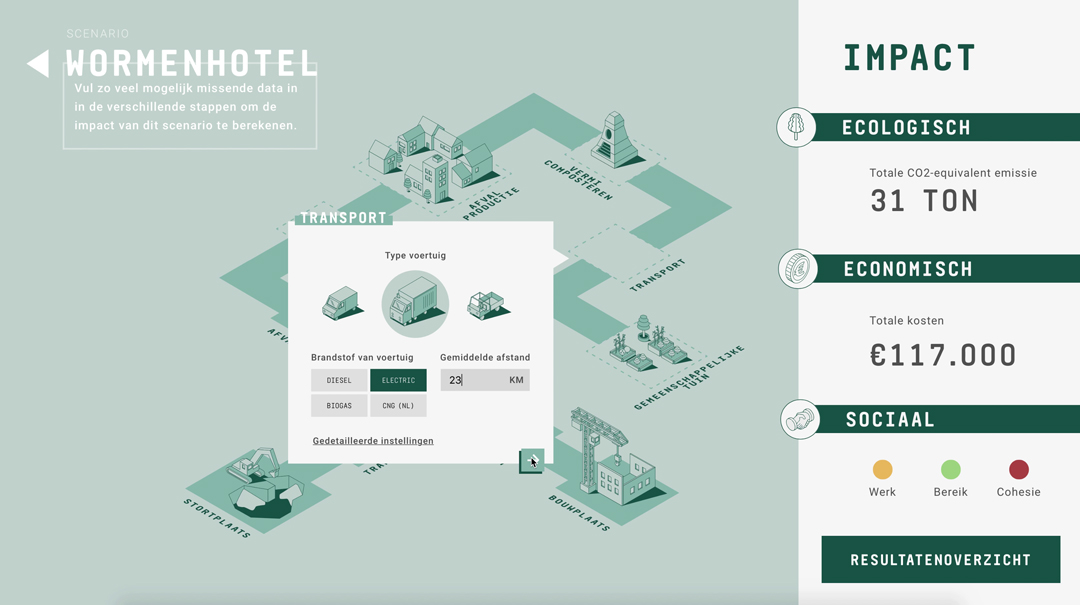
Next step is to fill in the required data for each step of the process; one input step could be the transportation and fuel type.
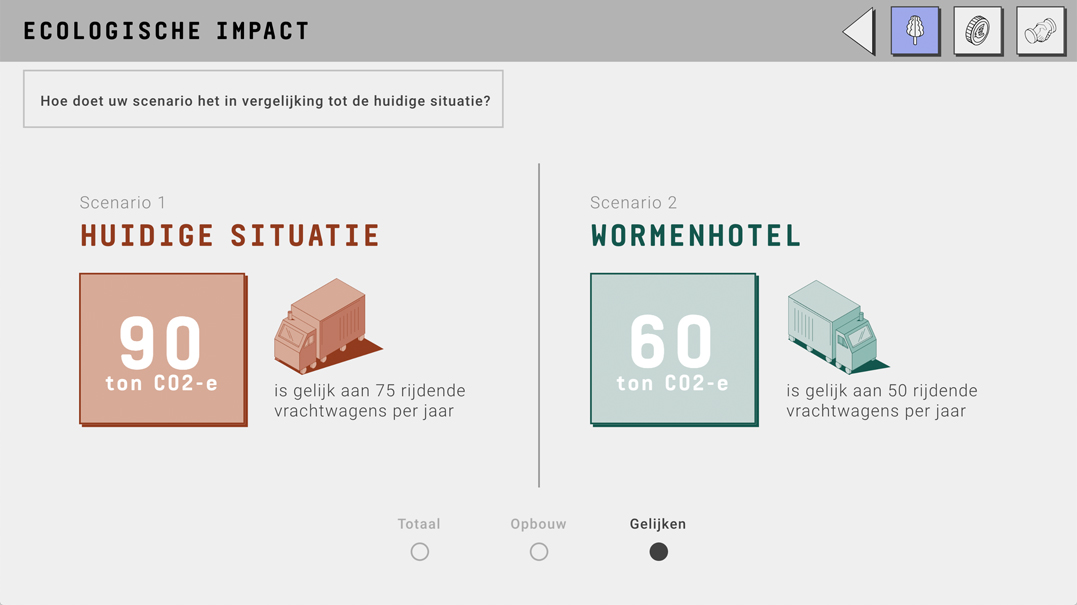
After all data has been filled in, the user can evaluate the results. To make the results, such as the amount of emission, more understandable, we decided to compare with the emission that would result from x number of trucks driving a certain distance.
Key Learnings
Educating and empowering decision-makers
We created a prototype that can:
- Educate people of the ecological, economical and social impact of using different waste treatment methods.
- Empower the municipality and small- and medium enterprises to make more informed decisions regarding waste treatment.